In perfumery, time is often seen as the enemy. Launches stack up, calendars compress, brands demand faster deliveries. Yet at Parcolux, we've made a radical choice: we refuse to shorten maceration time.
What is maceration?
Maceration is the stage where the fragrance concentrate — the raw assembly of ingredients — rests in alcohol for several weeks. A silent, invisible process, but a fundamental one. During this time, aromatic molecules bind, stabilize, and form the perfume's final sillage.
A perfume that hasn't macerated is a perfume that hasn't finished being born.
Why 4 to 6 weeks?
Perfume essences are made of hundreds of molecules. Each has its own diffusion speed, its own affinity with alcohol. Top notes (bergamot, citrus, aromatics) are light and volatile. Base notes (musk, wood, amber, vanilla) are heavy, deep, persistent.
For the final fragrance to have a coherent olfactory structure — a top that introduces, a heart that persists, a base that signs — these molecules need time to bind. Accelerating this process yields a flat juice, without depth, that fades too quickly on skin.
Our protocol
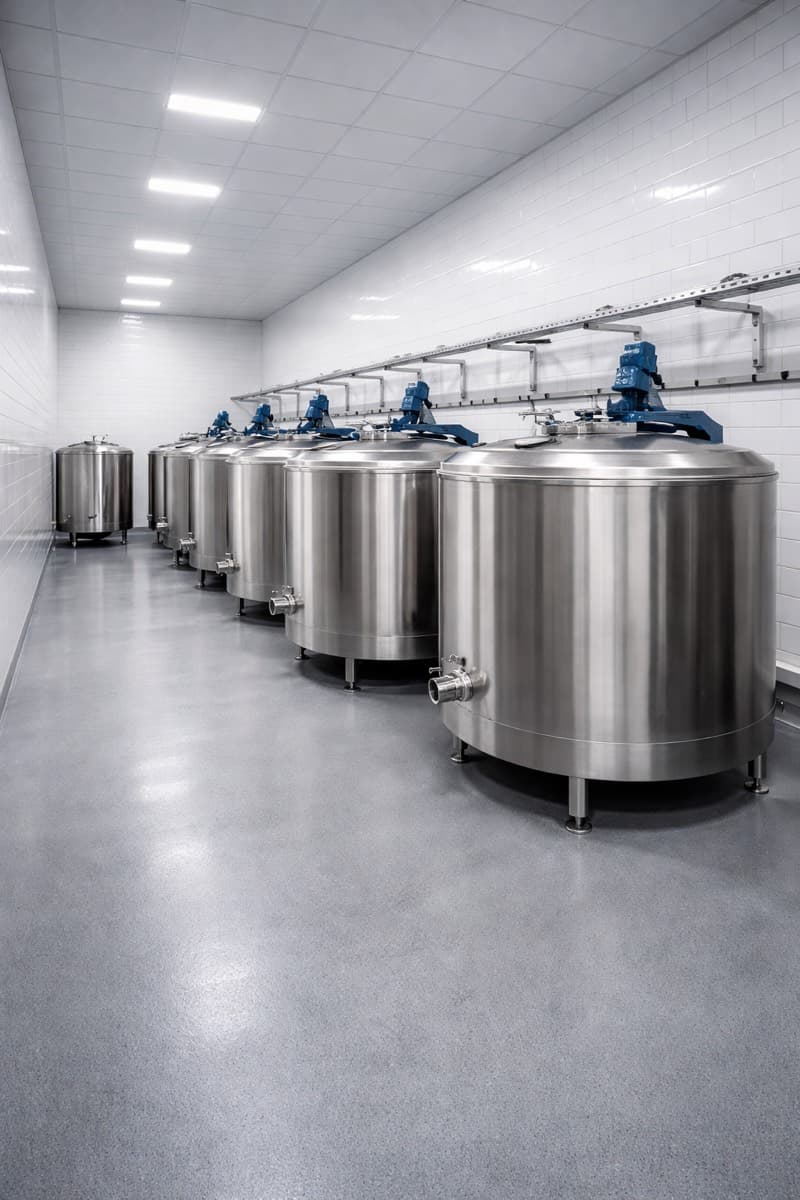
At Parcolux, every batch undergoes a minimum of 4 weeks maceration, up to 6 weeks for complex or highly concentrated compositions. Stainless steel tanks are kept at constant temperature (14°C), shielded from light, and organoleptic checks happen at D+7, D+21, and D+42.
This is what we've stood for for thirty years. And what we'll keep defending.